
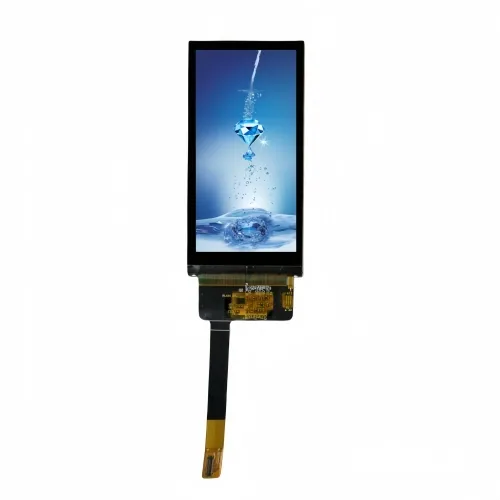
Transflective screen, also known as a transflective display or semi-transmissive/semi-reflective screen, is a display technology that combines both reflective and transmissive properties. It uses a mirror-like reflective film instead of a traditional reflector, allowing the front of the screen to reflect ambient light while maintaining transparency on the back to let backlight pass through. This type of screen is widely used in aircraft instruments, automotive devices, outdoor portable electronics, and high-end smartphones.
The surface of the screen is coated so that both transmitted and reflected light account for 50% each. In bright environments, it enhances visibility through reflection, while in low-light conditions, the backlight provides illumination. This enables adaptive display performance based on ambient lighting conditions.
The secret of a transflective screen lies in its semi-reflective film. This is similar to the glass used on certain buildings, some sunglasses, or automotive window tints. The front side acts like a mirror—reflecting sunlight to provide a readable display under bright outdoor conditions. Meanwhile, the back side is see-through, allowing the screen’s backlight to pass through.
In a transflective display, the traditional reflector on the back of a reflective screen is replaced with a mirror-like reflective film. This film appears as a mirror from the front, but from the back, it’s transparent—essentially a piece of glass that reflects and transmits light. Combined with a fully transmissive backlight, a transflective screen becomes a hybrid of reflective and transmissive display technologies.
The characteristic of the semi-reverse semi-translucent screen is that the backlight brightness automatically adapts to the outdoor environment. The stronger the outdoor sunlight, the stronger the reflected backlight (sunlight) from the reflective film will be. Even the strongest outdoor light intensity is not a problem. The stronger the ambient light, the stronger the reflected backlight will be. In the outdoors, it can completely do without additional backlight lighting equipment, so it saves much power compared to the fully transparent screen, and the display effect is also much better.